The Small Modular Reactor Regulators' Forum (SMR RF) is a regulator-to-regulator entity established in 2014 as an international forum for regulatory bodies driven by its members to specifically address regulatory challenges related to SMRs.
The SMR RF acts as a peer-to-peer platform, where experienced regulators work together on the development of consensus-based documents on SMR-related technical and regulatory issues of interest to Forum's Members.
 SMR RF Opening Plenary – 11 December 2023 (Photo: IAEA)
The SMR RF works cooperatively with other regulatory forums and organizations. The OECD/NEA and the WNA-CORDEL, along with the European Commission, act as permanent observers for the Forum. The SMR RF also collaborates on topics of relevance with the Regulatory Cooperation Forum (RCF) and Generation IV International Forum (GIF), among others.
The Forum may, on occasion, invite selected representatives of these organizations or any other relevant ones to participate in its activities.
Furthermore, in accordance with the SMR RF Terms of Reference, the SMR RF may engage in other activities under its co-ordination or with its participation or contribution, upon a proposal from an international organization or by the SMR RF Steering Committee or individual Forum Member(s).
The scope of the SMR Regulators' Forum (SMR RF) is to identify, enhance understanding of, and address key regulatory challenges that are emerging in SMR regulatory and licensing discussions to develop common regulatory positions and inform changes, if necessary, to existing requirements and regulatory practices.
The objectives of the SMR RF are to:
- develop common positions based on identification and discussion of key safety issues that may challenge regulatory reviews associated with SMRs, including, if possible, approaches for their resolution;
- encourage enhanced nuclear safety and security;
- facilitate international cooperation among regulators performing SMR-related assessments;
- facilitate efficient, robust and thorough regulatory decisions;
- advise the IAEA on the need for revision or development of new publications on safety and security of SMRs.
The SMR RF activities result in the following outcomes:
- common position statements on regulatory (policy and technical) issues;
- suggestions for revisions to, or drafting of, IAEA publications, especially the IAEA Safety Standards regarding SMRs;
- generation and sharing of information that regulators can use to enhance their regulatory framework and regulatory activities;
- description of regulatory challenges and discussions on paths forward
- suggestions for high level issues to be raised before international codes and standards organizations.
Importantly, the outcomes of the Forum do not replace responsibility of national regulatory bodies for making regulatory decisions.
Membership
The SMR RF membership is open to all IAEA Member States able to contribute in a meaningful manner to the work of its Working Groups (WGs). The work being conducted is generally of a complex nuclear safety nature with a focus on SMRs that requires experience in:
- multidisciplinary technical assessment across various areas of nuclear safety;
- application of defence in depth in design and safety analysis; and
- use of risk informed methodologies in regulatory decision making.
Membership presupposes a commitment to devote adequate resources, with appropriate experience and knowledge base, to ensure that the Forum's purpose and objectives can be fully achieved.
If a Member State is a SMR technology holder or developer, has operating experience or already has commitments for new build or firm plans to have commitments for licensing in the near future, it may apply for the membership of the Forum, which will then be subject to an approval process.

Observers
The SMR RF Steering Committee (SC) may grant the status of Observer to the international and regional organizations that have expressed an interest. These organizations, as Observers, may participate in the Forum's WGs and have a read-only access to the Forum's restricted website. Their participation in the SC's activities is limited to the SMR RF Plenaries only.
The IAEA Member States can participate as Observers to a single combined meeting of the SMR RF SC and WGs prior to submitting a membership request to join the Forum.
The list of Forum Members and Observers is available here.
According to the SMR RF Terms of Reference, the Forum is financed by its Members through annual extra-budgetary contributions. The contributions are used to provide the Scientific Secretariat and to support the Forum's activities, including its regular meetings and educational workshops, and to promote Forum's work and its outputs. The SMR RF SC may accept, on a case-by-case basis, proposals from respective Forum Members of contributions in-kind.
This Forum is comprised of the Steering Committee (SC), the Working Groups (WGs) and the Scientific Secretariat.
The SC, among other responsibilities, manages and approves the detailed programme of work, the establishment and closure of WGs, the appointment of WGs Chairs and Co-chairs, the reports and position statements developed by the WGs, reviews, the membership and observer applications, reviews progress to ensure that WGs and the Forum are achieving their goals according to the programme plan. The SC is composed of:
- one representative of each Forum Member, capable of fully representing their regulatory body's position in technical matters and decision-making;
- one Chairperson and one Vice-Chairperson, elected by the SMR RF SC from its membership for the three-year term.
The task-specific technical SMR RF Working Groups (WGs) are composed of:
- a WG Chair (and Co-chair(s)) appointed by the SC to coordinate the group's activities;
- experts from the Forum Members, capable of fully representing their regulatory body's position in technical matters; and
- experts from the IAEA staff, approved by the SC, to provide WG experts with information related to IAEA publications that may be useful for ongoing discussions and learn from experts about their needs and the gaps they identify in the IAEA standards and guidance.
Provided by the Regulatory Activities Section of the Division of Nuclear Installation Safety (RAS/NSNI) of the IAEA, the Scientific Secretariat is responsible for supporting the Steering Committee (SC) and the Working Groups (WGs) in achieving the Forum's objectives.
To develop the topics defined by the SC for the current working phase, three SMR RF WGs were established as follows:

Licensing Issues (LI) WG addresses issues related to regulatory approaches for the licensing of SMRs, including key regulatory interventions and international regulatory cooperation.
Design and Safety Analysis (DSA) WG addresses issues related to the safety demonstration of designs, including the consideration of fundamental safety functions and key design requirements, the integration of safety, security and safeguards and the safety analysis approaches for SMRs.
Manufacturing, Construction, Commissioning and Operation (MCCO) WG addresses issues related to the manufacturing, construction, commissioning, operation and maintenance of SMRs, including long-lead procurement items and the organizational capability of stakeholders involved in the deployment of SMRs.
The SMR RF SC and WGs hold combined biannual meetings, usually in spring and autumn, organized by the Scientific Secretariat.
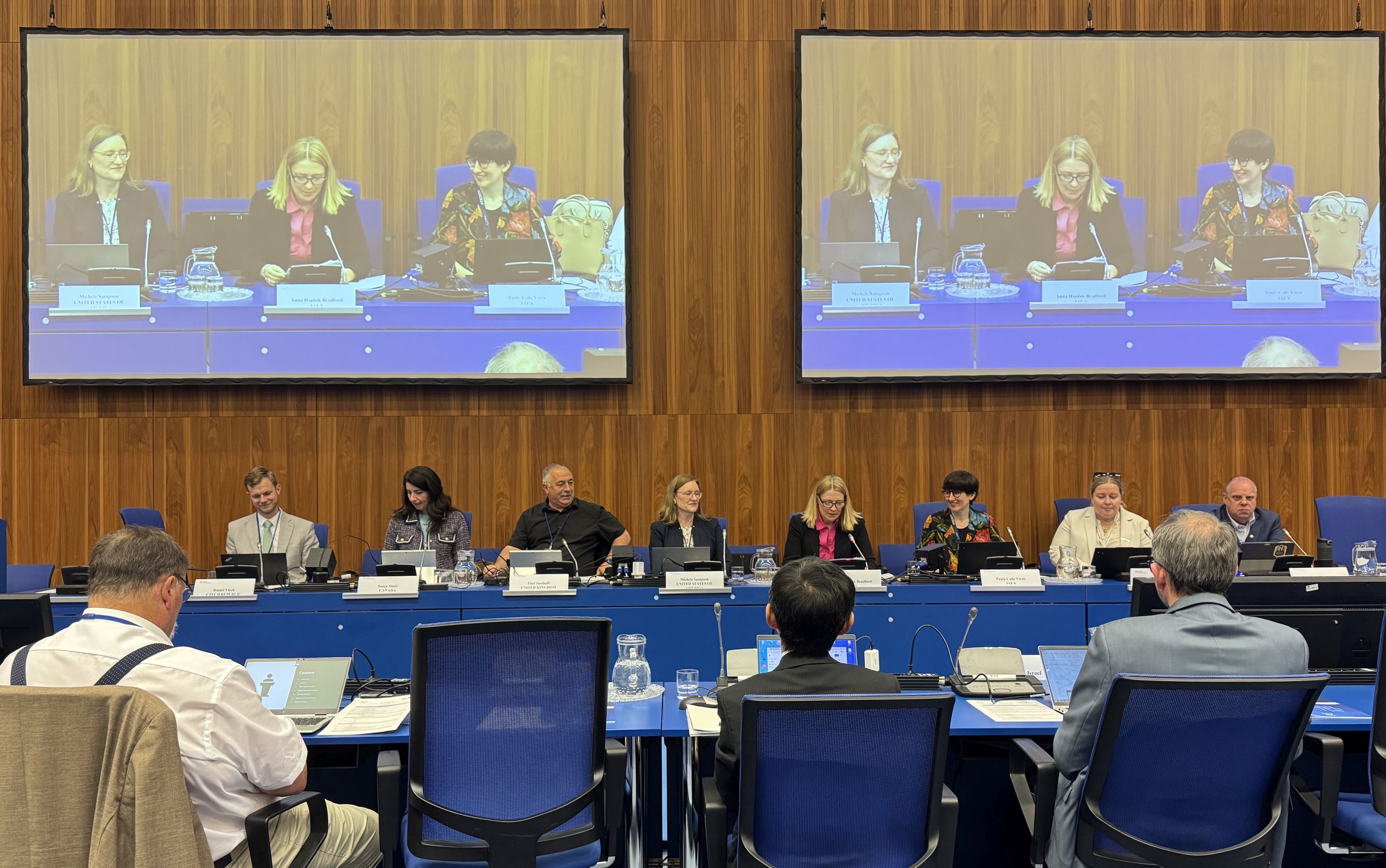 SMR RF Chairs, Working Group (WG) Chairs and Scientific Secretariat at Opening Plenary – 04 May 2026 (Photo: IAEA)

The SMR RF Chairperson is Ms. Michele Sampson. Ms. Sampson is the Deputy Director for Licensing and Programs in the Office of Advanced Reactors at the U.S. Nuclear Regulatory Commission. Since joining the NRC in 2007, she has held several leadership roles across nuclear safety, security, and engineering. Prior to the NRC, she worked for the U.S. Department of Transportation and at USEC's Paducah Gaseous Diffusion Plant. Ms. Sampson holds degrees from the University of Tennessee at Knoxville and Murray State University and is an alumna of the NRC's SES Candidate Development Program.

The SMR RF Vice Chairperson is Mr Paul Stenhoff. Mr Stenhoff joined the Forum in 2021 initially as a member of the Licensing Working Group and, since 2022, he has been a member of the MCCO Working Group. He is now the Nuclear Site Licensing (NSL) Lead at the UK Office for Nuclear Regulation (ONR).

The Licensing Issues (LI) Working Group Chair is Mr Sean Belyea. Mr Belyea is Senior Project Officer at the Advanced Reactor Licensing Division at the Canadian Nuclear Safety Commission (CNSC).

The Design and Safety Analysis (DSA) Working Group Chair is Mr Mark Drummond. Mr Drummond is a Nuclear Safety Inspector at the UK Office for Nuclear Regulation (UK ONR).

The Manufacturing, Construction, Commissioning and Operation (MCCO) Working Group Chair is Mr Daniel Vlček. Mr Vlček is a nuclear engineer and inspector at the State Office for Nuclear Safety (SÚJB) of Czechia.

The SMR RF Scientific Secretary is Ms Paula Calle Vives. She is the Technical Lead for New Technologies at the IAEA Regulatory Activities Section, managing activities on small modular reactor (SMR) safety and regulation, fusion and the regulatory track of the IAEA's Nuclear Harmonization and Standardization Initiative (NHSI).
The work being conducted by the SMR RF is generally of a complex nature with a focus on SMRs. The SMR RF selects topics to be considered during each phase of work. The topics are proposed by the SMR RF Working Groups (WGs) and approved by the SMR RF Steering Committee.
SMR RF plenary sessions and working meetings, May 2026 (Photos: IAEA)
Based on the complexity of the chosen topics, the SMR RF Steering Committee decides on how long the work phase will take. Each phase lasts between two and three years. The work is carried out by task-specific technical SMR RF Working Groups (WGs), composed of experts from the Forum Members with the appropriate expertise to contribute effectively to the development of the topics allocated to their WG and to ensure that the views of their regulatory bodies are represented.
The SMR RF has undertaken four phases of work.
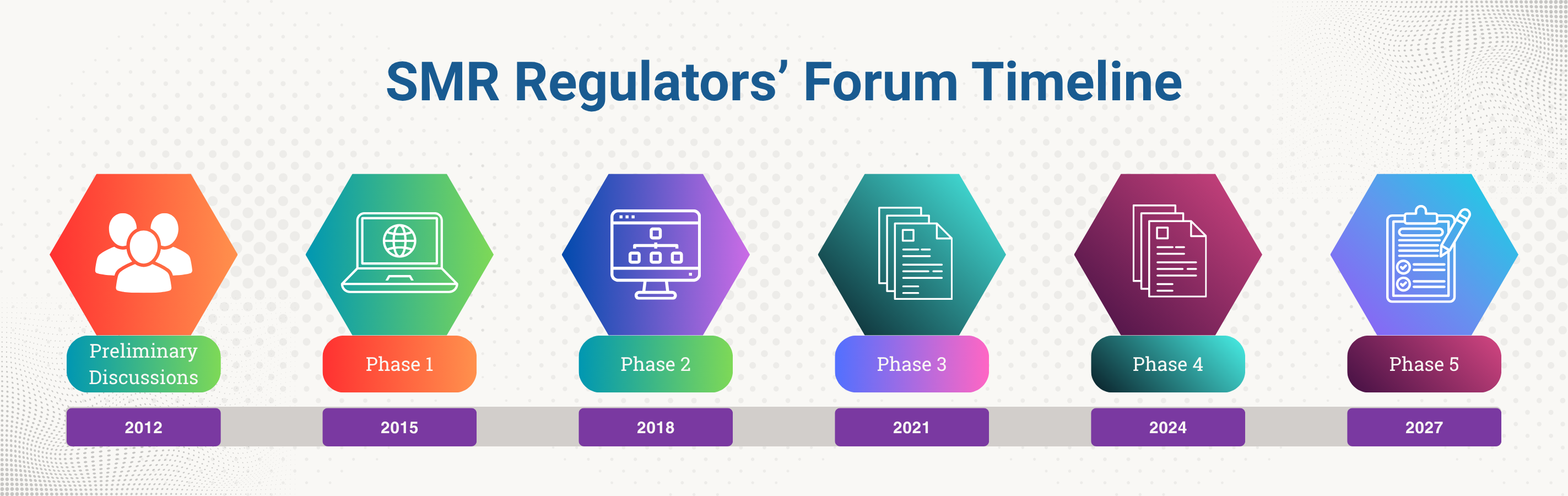
Phase 1 (Pilot) of the SMR RF was launched in March 2015 to demonstrate the ability to produce meaningful cooperative outputs. The SMR RF WGs studied how emergency planning zones, the principles of graded approach and defence-in-depth should be applied to SMRs.
During Phase 2, topics on licensing issues, design and safety analysis, and manufacturing, construction, commissioning and operation issues were developed.
In Phase 3, SMR RF WGs considered: the integration of safety, security and safeguards (3S) in SMR designs; the impact on defence-in-depth due to containment features of advanced non-light water SMRs; and the implications of long-lead procurement, as well as the impact on the conduct of authorized activities by licensees in the case of SMRs.
In August 2022, the SMR RF joined the IAEA Nuclear Harmonization and Standardization Initiative (NHSI) to lead the Regulatory Track WG3, tasked with developing processes for leveraging other regulatory bodies' reviews and for enabling them to work together when performing reviews. This work resulted in the publication in 2025 of the IAEA-TECDOC-2098 Collaborative Reviews and Effective Leveraging.
The collaboration between the SMR RF and NHSI continued in Phase II and led to the development of the Regulatory Cooperation Toolkit (RCT). The RCT was made available in 2026. Building on the IAEA TECDOCs 2098, 2105 and 2118, RCT is a set of guidance documents, templates, questionnaires, examples and case studies designed to provide practical support to regulatory bodies in joint and collaborative reviews, as well as in leveraging existing assessments. It also identifies and categorizes differences in regulatory expectations and provides resources to bridge them. It is a concrete, practical resource, ready for direct use by the regulatory bodies.
Launched in 2024, SMR RF Phase 4 has addressed several topics, such as: mechanistic source term (DSA WG); 3S in remote locations (DSA WG); fleet-wide deployment of SMRs (MCCO WG); manufacturing in the absence of an owner/ licensee (MCCO WG); construction oversight (MCCO WG); and organizational capability of a new licensee (with no prior nuclear experience) (LI WG).
In 2027, the SMR RF will start its Phase 5 (2027-2029) work, addressing the following initial topics:
- Effective Application/Implementation of Performance-Based Regulations (LI WG);
- Design Completion Evaluation and Expectations (Safety Case Readiness) (LI WG);
- Independence of Levels of DiD in SMRs (DSA WG);
- Unique Challenges Posed by External Hazards for Floating NPPs and Reactors as a Means of Propulsion (DSA WG);
- Classification of SSCs in SMRs (DSA WG);
- Challenges of SMRs in Commissioning and Operation (MCCO WG); and
- Certification of Modules and Components across Multiple Jurisdictions (MCCO WG).
The IAEA Nuclear Harmonization and Standardization Initiative (NHSI) was launched by the IAEA DG Rafael Mariano Grossi in March 2022, with the aim of harmonizing and standardizing regulatory and industrial approaches in support of the effective and safe and secure global deployment of advanced nuclear reactors.
To meet its purpose of making substantive progress towards nuclear harmonization and standardization, the IAEA NHSI work has been carried out in two tracks:
- Regulatory Track
- Industry Track
The Regulatory Track (RT) aims at:
- minimizing repetition among regulatory reviews by different Member States;
- minimizing need for design changes arising from differences among Member States' regulations;
- establishing common basis for the Member States' regulatory decisions while preserving their sovereignty.
NHSI Phase I (2022-2024)
In August 2022, the SMR RF officially joined the IAEA NHSI RT to lead the Regulatory Track WG3, tasked with developing processes for leveraging other regulatory bodies' reviews and for enabling them to work together when performing reviews. The SMR RF Licensing Issues Working Group (WG 1) served as the main organizational modality, with its focus, composition and schedule adjusted accordingly. For this effort, the SMR RF Members (Canada, Czech Republic, China, Finland, France, Japan, Republic of Korea, Netherlands, Russian Federation, South Africa, United Kingdom and United States of America) were joined by experts from other IAEA Member States including Argentina, Armenia, Belgium, Brazil, India, Poland, Romania, Slovenia, Sweden, Switzerland, Türkiye, United Arab Emirates, as well as the OECD-NEA. During Phase I, experts met ten times, five times virtually and five in a hybrid format. This work resulted in the publication in 2025 of the IAEA-TECDOC-2098 Collaborative Reviews and Effective Leveraging.
TECDOC-2098 explores how regulatory bodies can leverage each other's reviews, while maintaining independent assessments aligned with national requirements. Drawing on lessons from past and ongoing multinational efforts, this document is a must-read for regulatory bodies, technical support organizations, and industry stakeholders involved in pre-licensing and licensing of advanced reactor designs.
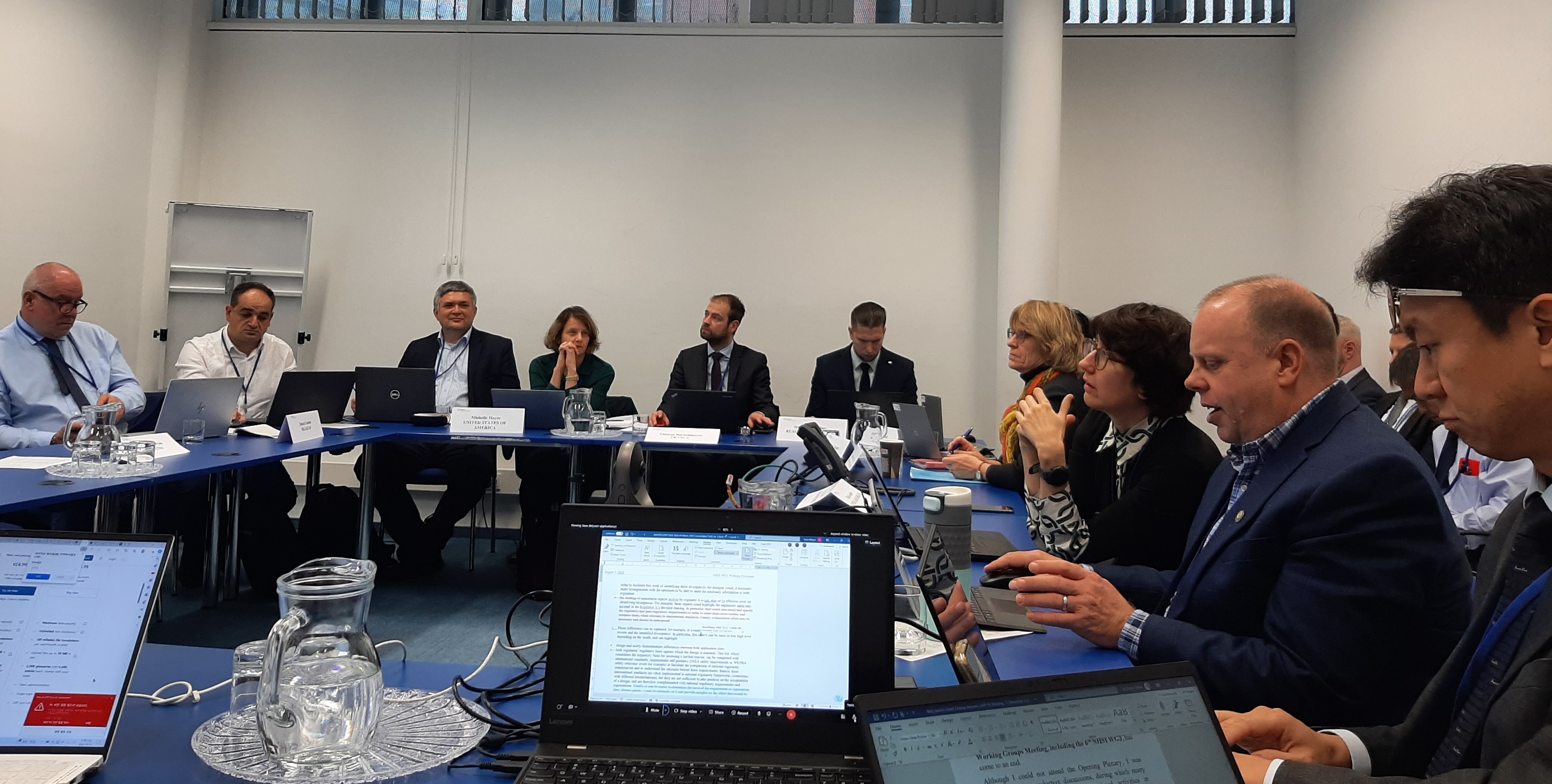 Licensing Issues Working Group at NHSI WG3 Meeting – 13 December 2023 (Photo: IAEA)
NHSI Phase II (2025-2026)
At the NHSI Plenary Meeting in October 2024, the IAEA was requested to continue the efforts mainly on the implementation of the Phase I processes and the subsequent analysis of implementation feedback. In this context, the SMR RF continued its partnership with the NHSI RT to develop a Regulatory Cooperation Toolkit (RCT), which was made available in 2026.
Building on the IAEA TECDOCs 2098, 2105 and 2118, the RCT is a set of guidance documents, templates, questionnaires, examples and case studies designed to provide practical support to regulatory bodies in joint and collaborative reviews, as well as in leveraging existing assessments. It also identifies and categorizes differences in regulatory expectations and provides resources to bridge them. It is a concrete, practical resource, ready for direct use by the regulatory bodies.
Capacity-Building Activities
From 2021 to 2025, the Forum conducted eight Regional Educational Workshops (EWS) (the full list is below). The main objectives of these workshops were dissemination of the Forum's outputs and capacity-building with respect to SMR regulation. These workshops also served as an opportunity to stimulate exchange of information and experience between participants and lecturers from the Forum and from the IAEA, and, even more importantly, among the participants themselves. They were primarily targeted at regulatory bodies of countries embarking on a nuclear power programme or those expanding their nuclear power programmes and considering deployment of SMRs.
SMR RF Educational Workshops (Photos: IAEA)
The programme for the workshops covered, inter alia, the following issues:
- Overview of SMR technologies;
- SMR areas of novelty and associated regulatory challenges;
- Design and Safety Analysis for SMRs;
- SMR related licensing challenges and regulatory cooperation;
- SMR related manufacturing, construction, commissioning, and operation issues;
- IAEA Initiatives on SMRs safety and regulation.
In addition to lectures delivered by the SMR RF experts and the SMR RF Scientific Secretariat, the participants were invited to make presentations on nuclear programmes in their countries to contribute to the sharing of information and experience with respect to the organization of their regulatory bodies and relevant regulatory frameworks, main regulatory challenges and prospects for/status of SMR deployment.
Regional educational workshops — past and recent events. Select a row to open the workshop report.
The SMR RF EWS paved the way for the IAEA Pilot School for Regulating Small Modular Reactors. The Pilot School, supported by the SMR RF alongside the Regulatory Cooperation Forum (RCF), was hosted by the National Atomic Energy Agency of Poland (PAA) from 25 August to 2 September in Warsaw, Poland. 29 participants from 19 IAEA Member States attended the Pilot School.
Week 1 of the Pilot School focused on adapting national regulatory frameworks and applying IAEA Safety Standards to SMR design and safety analysis. Participants engaged in case studies, including real-world examples from France, Canada, and the USA, and explored design reviews of NuScale and BWRX-300.
Week 2 concentrated on the SMR RF common positions and advanced licensing challenges, covering topics such as graded approach, defence-in-depth, emergency planning zones, licensing processes, and manufacturing and commissioning oversight.
The programme also included a technical visit to the National Centre for Nuclear Research.
IAEA Pilot School for Regulating SMRs – Warsaw, Poland, August–September 2025 (Photos: PAA)
Building on the experience and lessons learned from the Pilot School, the IAEA developed a comprehensive Interregional Training Course on Safety and Regulatory Aspects of Small Modular Reactors (SMRs) and Other Advanced Reactor Technologies conducted under the Interregional Technical Cooperation Programme on SMRs.
The first installment was conducted over three weeks, from 20 April to 8 May 2026, in Vienna at the IAEA HQ, with the continued support from the SMR RF and RCF.
The objective of the Training course is capacity-building via equipping regulatory bodies with the knowledge and tools necessary to ensure the safe deployment and effective oversight of SMRs and other innovative reactor technologies. Building on the programme, materials and feedback from the Pilot School, the new format of the Training Course introduces several improvements, including: detailed presentations on safety aspects of different SMR technologies; programme structured through thematic blocks, comparative exercises across regulatory frameworks, and expert support for working groups; and dynamic learning tools, animations, and case-based learning.
Interregional Training Course on Safety Aspects of SMRs and Other Innovative Reactor Technologies – IAEA HQ, Vienna, 20 April – 8 May 2026 (Photos: IAEA)
The SMR RF produces consensus-based reports on technical and regulatory SMR-related issues. The reports are developed by the SMR RF Working Groups (WGs) and approved by the SMR RF Steering Committee.
The SMR RF reports are based on information, insights, and experience gained from the regulatory activities of the SMR RF Members and are intended to provide useful information to regulatory bodies and industry in the development, deployment, and oversight of SMRs. The IAEA Safety Standards and other publications serve as reference for the SMR RF discussions and its common positions, but the key findings are produced by consensus by the Forum's experts and based on their own experiences and may, therefore, deviate from the IAEA publications. In such cases, they usually present suggestions for revision or drafting of new IAEA publications related to SMRs.
The content produced by the SMR RF is protected by copyright. The Forum strives to make information concerning its activities available in the public domain, and its reports are publicly available. However, where external parties seek to use this information, in part or in its entirety, for their own purposes, the Forum requires the parties to seek authorization from the Scientific Secretary at: SMR RF Contact Point
From March 2015 to May 2017, the SMR RF was conducted as a pilot project, with the objective of addressing different regulatory issues for both light-water and non-light-water SMR designs.
Three Working Groups (WGs) were established and produced the following reports:
SMR RF Pilot Project Report:
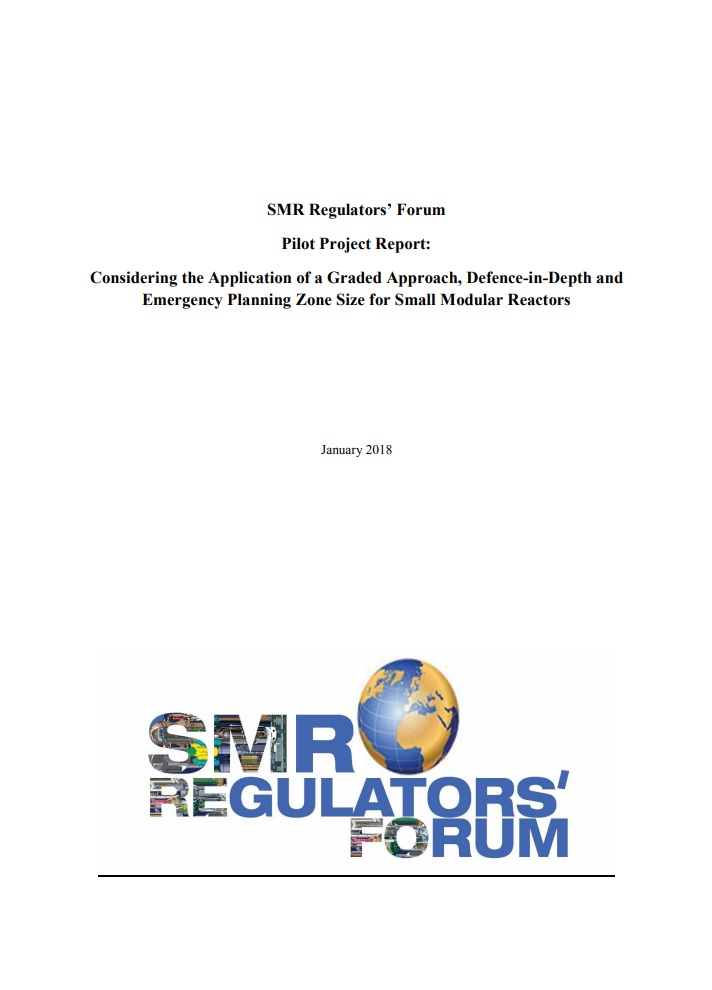
This report summarizes the key findings, including common positions in relation to application of the principles of the graded approach, defence-in-depth and emergency planning zones to SMRs. The appendices to this report contain SMR project status and issues in Forum Member States (Appendix I), reports from each of the Forum WGs (Appendices II – IV), and the survey sent out by the Graded Approach and Defence-in-Depth WGs (Appendix V).
Click here to download the complete report and here for a version without appendices.
Appendix II: Report from Working Group on Graded Approach:
This report focuses on applying the graded approach to regulating SMRs, considering the novel SMR technologies and the understanding of Member States' policies.
Through the analysis of how the graded approach is applied in different Member States (Canada, Finland, France, Russia, USA), common elements and differences in regulatory frameworks, as well as challenges and specific practices in applying the graded approach to SMRs are identified.
In addition to the key findings and recommendations for enhancing the application of graded approach to SMRs, this report also presents suggestions for future work, including developing a technical document by the IAEA on this topic.
Click here to download the report.
Appendix III: Report from Working Group on Defence-in-Depth:
The report addresses the application of the Defence-in-Depth (DiD) concept to SMRs, highlighting its importance in ensuring nuclear safety and identifying key regulatory challenges and recommendations for SMRs.
The report discusses unique SMR features, such as smaller size, novel technologies, modular design, and varied applications, and how these impact the application of DiD principles. Key safety issues related to siting, design, and post-design activities, as well as internal and external hazards, redundancy, diversification, and probabilistic safety assessments (PSAs), are thoroughly analysed.
The report also underscores the importance of effective emergency arrangements and the independence of DiD levels to ensure robust safety measures for SMRs.
Click here to download the report.
Appendix IV: Report from Working Group on Emergency Planning Zone:
The report addresses the regulatory challenges related to the size of Emergency Planning Zones (EPZ) for SMRs. It emphasizes the need for scalable EPZ sizes based on specific design characteristics and site-specific considerations. Key factors influencing EPZ size include plant design, postulated initiating events, safety analyses, and offsite dose consequences.
The report shares regulatory experiences, captures good practices, and discusses the effectiveness of the IAEA safety requirements and methodology in establishing EPZs. The report also highlights the importance of considering local infrastructure, public and political policies, and the need for community emergency preparedness, especially when EPZs are near densely populated areas.
Click here to download the report.
Upon successful completion of the 'Pilot Phase', in November 2017, the SMR RF continued to Phase 2 and established the following new Working Groups (WGs):
- Licensing Issues (LI) WG
- Design and Safety Analysis (DSA) WG
- Manufacturing, Construction, Commissioning and Operation (MCCO) WG
SMR RF Phase 2 Summary Report:
This report summarizes the key Phase 2 findings of the LI, DSA and MCCO WGs, including common positions in relation to: key regulatory interventions during a SMR lifecycle; potential issues related to the licensing process for a 'first of a kind' vs 'nth of a kind' design; licensing of new build projects with multiple module/unit facilities; multi-unit/multi-module aspects specific to SMRs; considerations in the use of passive and inherent safety features in SMR designs; aspects of beyond design basis analysis relevant to SMRs; manufacturability, supply chain management and commissioning of SMRs; collection and use of experience in the lifecycle of SMR facilities; conduct of maintenance in SMRs; conduct of co-activities and combined activities on a multiple unit SMR facility site.
Click here to download the summary report.
SMR RF Phase 2 Report from Working Group on Licensing Issues:
This report produced by LI WG presents the key findings on the following topics:
- Regulatory Interventions: emphasizes the importance of strategic regulatory points during the SMR lifecycle, ensuring efficient validation of safety and progression of regulatory activities.
- First of a Kind (FOAK) vs. Nth of a Kind (NOAK) Designs: discusses the differences in licensing FOAK and NOAK SMR projects, highlighting the need for additional demonstration requirements for FOAK designs.
- Multi-Module Licensing: addresses the challenges and considerations in licensing multi-module/unit SMR facilities, including shared safety systems, personnel, and control rooms.
Click here to download the report.
SMR RF Phase 2 Report from Working Group on Design and Safety Analysis:
This report produced by DSA WG addresses the following topics:
- Multi-Unit/Module Aspects: explores the safety and operational benefits and challenges of multi-unit/module SMR designs, emphasizing the importance of defence-in-depth (DiD) and hazard considerations.
- Passive and Inherent Safety Features: evaluates the use of passive and inherent safety features in SMR designs, addressing uncertainties in performance claims and the need for integrated testing.
- Beyond Design Basis Analysis: discusses the characterization of severe accidents for novel SMR concepts and the role of DiD in preventing and mitigating severe accidents.
Click here to download the report.
SMR RF Phase 2 Report from Working Group on Manufacturing, Construction, Commissioning and Operation:
This report produced by DSA WG addresses the following topics:
- Modularity and Manufacturability: highlights the implications of modularity in SMR design and construction, stressing the importance of early involvement of suppliers and the need for tailored standards.
- Supply Chain Management: emphasizes the need for robust supply chain management to mitigate risks from a diverse and global supply chain.
- Commissioning and Operations: discusses the importance of a comprehensive commissioning program and the need for systematic experience measures throughout the SMR lifecycle.
Click here to download the report.
In November 2020, the SMR RF Steering Committee approved the topics for Phase 3 (2021-2023), to be addressed by the same LI, DSA and MCCO WGs as in Phase 2. However, since 2022, the LI WG has been leading the NHSI Regulatory track WG3 tasked with developing processes for leveraging other regulatory bodies' reviews and for enabling regulators to work together during ongoing regulatory reviews.
The final reports for Phase 3 were completed in December 2023 and published in early 2024. The five reports developed during Phase 3 can be found below:
SMR Regulators' Forum Phase 3 Summary Report:
This report summarizes the key Phase 3 findings of the DSA and MCCO WGs, including common positions in relation to containment systems, safety, security, safeguards (3S) interface management, regulatory considerations for long-lead items and authorized activities of Licensees.
Click here to download the summary report.
Containment Systems:
The containment building/structure is the principal barrier to radionuclide release credited during accidents for the traditional light water-cooled reactor (LWR) designs.
However, based on claims related to inherent and passive safety features, the reliance on the building/structure and its associated systems to provide the containment function is expected to be reduced in some advanced non-LWRs design, which may propose different provisions to limit radionuclide releases to the environment.
For these designs without a pressure retaining containment structure, the DSA WG endorses the term 'functional containment' and provides common regulatory positions on aspects related to SMR containment systems.
Click here to download the report.
Safety, Security and Safeguards from a Regulatory Perspective: An Integrated Approach:
Considerations of safety, security, and safeguards (3S) are essential in the design, construction, commissioning, operation and decommissioning stages of nuclear reactors, including SMRs.
To take advantage of synergies and resolve potential conflicts, the 3S interface management should be approached in a coordinated, risk-informed and balanced manner during the design stage.
This report:
- identifies key aspects of SMRs relevant to the adoption of the 3S-by-design;
- outlines a range of 3S interfaces;
- provides possible methodologies for integration of 3S;
- recommends good regulatory practices.
Click here to download the report.
Regulatory Considerations in Pre-Licensing Engagement for Long Lead Item Requests:
For SMRs, the manufacture of safety significant long-lead items (LLI) may occur prior to the establishment of a Licensee or with a smaller Licensee organization than typical.
On the other hand, organizations seek all regulatory assurance to proceed with the manufacture of LLI to speed up delivery of multiple unit projects.
This report addresses these issues and:
- introduces LLI for SMRs and associated regulatory challenges;
- considers the regulation of long-lead procurement if Licensee is still not know;
- identifies regulatory considerations of the "off-the-shelf" manufacturing business model.
Click here to download the report.
Conduct of Authorised Activities Impact on Stakeholders' Organisational Capabilities (Designers, Vendors, Manufacturers, Supply Chains, Operators):
The introduction of SMRs might impact the conduct of authorized activities by Licensees, in particular, their capability to ensure that their work and that performed by their supply chain demonstrably meets the requisite standards, recognizing that some work (e.g. SMR design or module manufacture) may have been completed long before making an application to the regulator.
It is also important to consider that, with SMRs, Licensee will likely be a smaller organization, more reliant on supply chain organizations and contractors, or even a new entity altogether.
This report explains differences in the SMR business model and its effect on Licensee's ability to conduct authorized activities, considering changes in size and capability of the Licensee.
Click here to download the report.
Phase 4 of the SMR Regulators' Forum commenced in 2024 and will run until the end of 2026. Under this programme, the Forum has published three new reports developed as part of its Phase 4 work:
SMR RF Phase 4 Report – Mechanistic Source Term:
This report has been produced by the Design and Safety Analysis (DSA) Working Group (WG) of the SMR RF during its working Phase 4 (2024 to 2026). It explores the application of mechanistic source term (MST) methodologies in the safety analysis of SMRs, particularly non-light water reactor (non-LWR) designs. Unlike traditional conservative approaches, MST uses realistic, scenario-specific modelling to assess the release and transport of radionuclides during nuclear accidents.
This MST approach enables more accurate assessments tailored to novel reactor designs, some of which do not rely on traditional containment structures or assume core melt scenarios. The report presents considerations, challenges and regulatory perspectives related to the use of mechanistic source term approaches for small modular reactors.
Click here to download the report.
SMR RF Phase 4 Report – Manufacturing without an Owner/Licensee:
This report has been produced by the Manufacturing, Construction, Commissioning and Operation Working Group (MCCO WG) of the SMR RF during its Phase 4 of work (2024 to 2026). It explores the innovative concept of off-the-shelf manufacturing for SMR components and modules in scenarios without a designated owner or licensee.
This approach is recognized for its potential to streamline deployment and reduce costs, and this report aims to unravel the complex challenges and opportunities that it presents.
Click here to download the report.
SMR RF Phase 4 Report – Fleet-Wide Deployment:
This report has been produced by the Manufacturing, Construction, Commissioning and Operation Working Group (MCCO WG) of the Forum during its Phase 4 of work (2024 to 2026). The report explores the conditions, strategies, and regulatory practices needed to enable fleet-wide deployment of SMRs across multiple countries and sites.
It focuses on how standardized designs, harmonized regulatory approaches, and coordinated manufacturing practices can reduce deployment barriers and support safe, efficient expansion of SMR fleets worldwide.
Click here to download the report.
The SMR Regulators' Forum is continuing work on three additional reports planned for publication in 2027:
- Continuation of 3S (safety, security and safeguards) topics (DSA)
- Construction oversight (MCCO)
- Organizational capability of a new licensee (no prior nuclear experience) (LI)
